

Hydro-ME

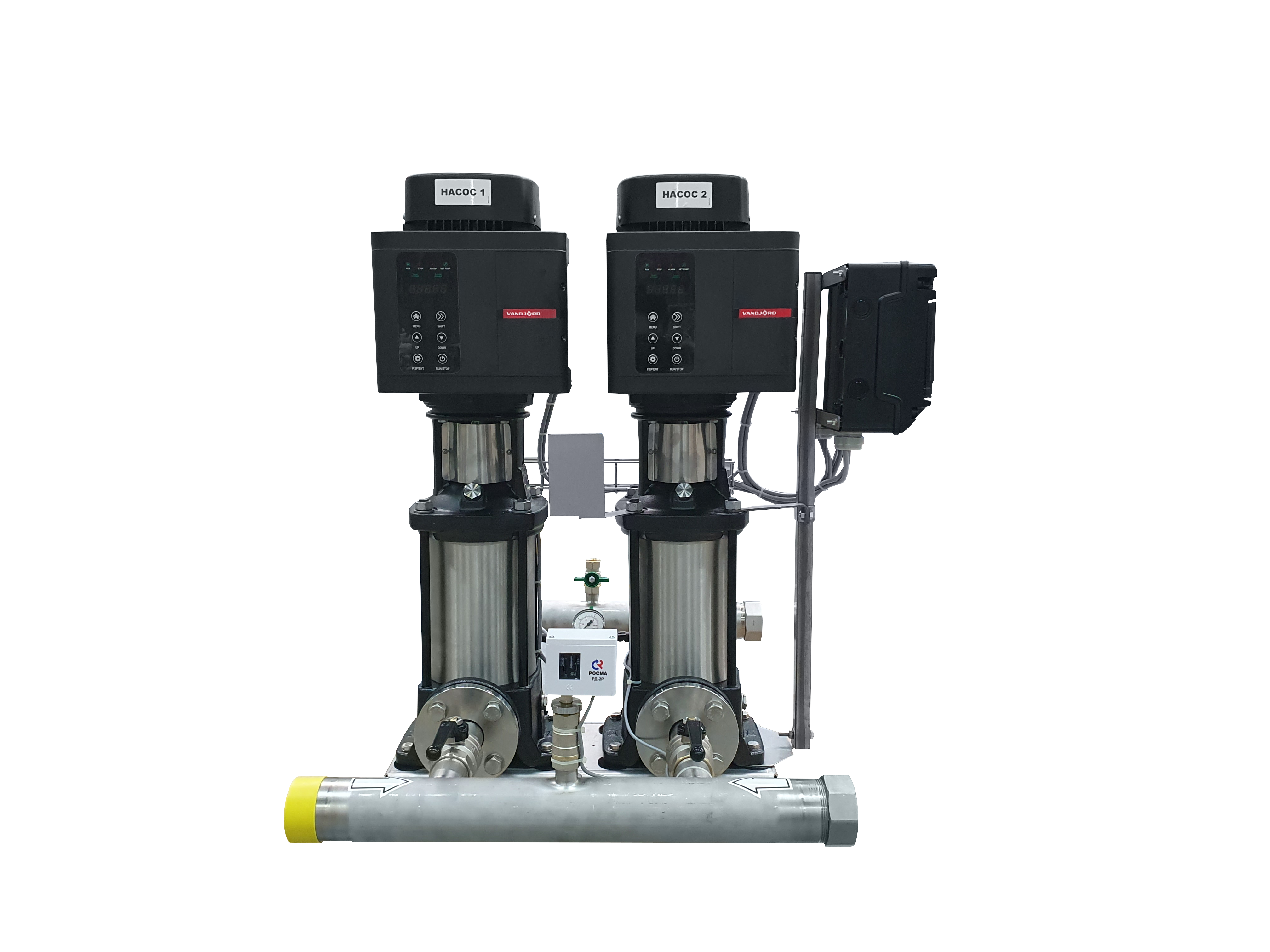
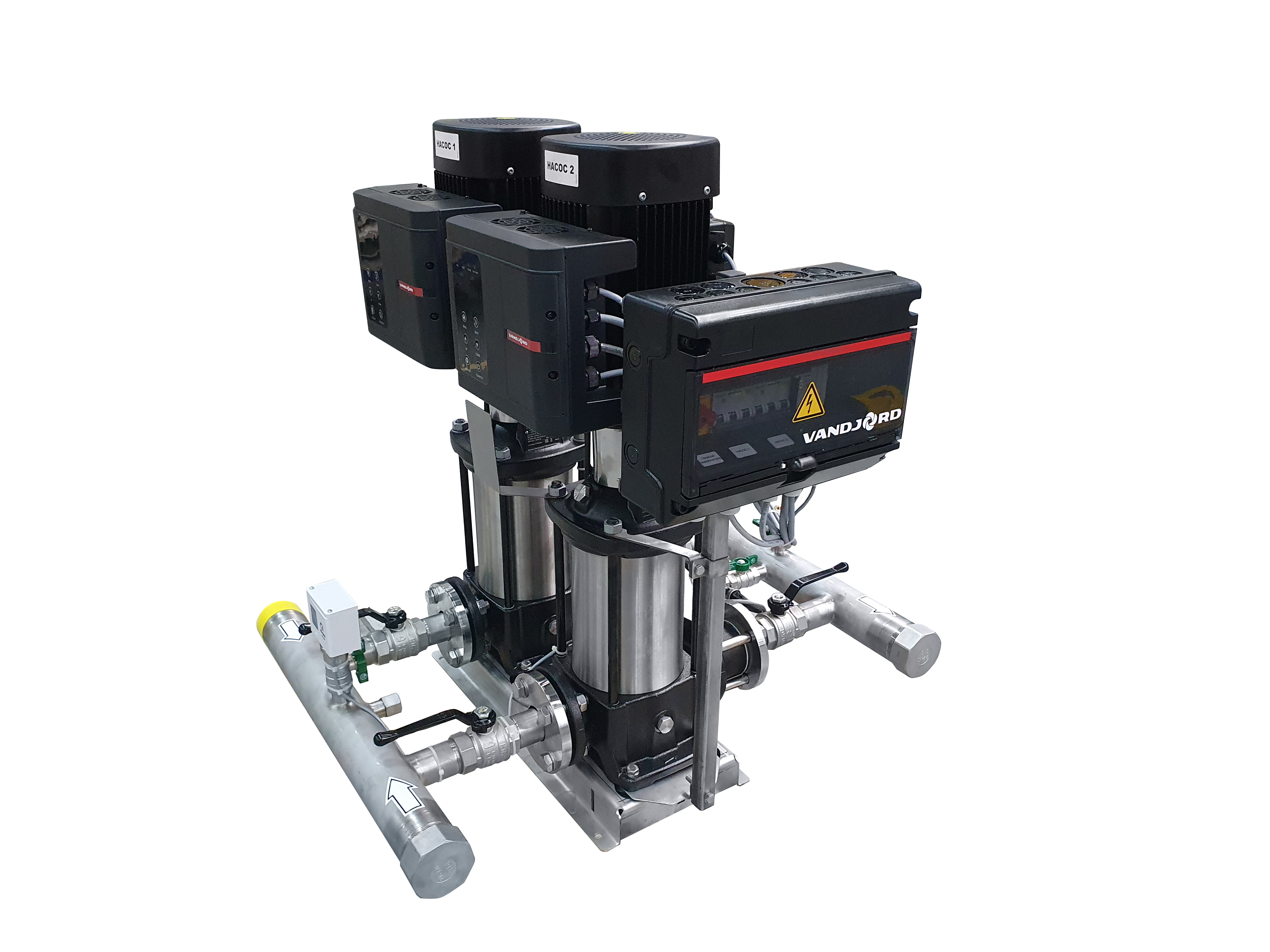


Hydro-ME pressure boost units are designed for pumping and pressure boost of clean, chemically non-aggressive water, as well as fire- and explosion-proof liquid without abrasive (solid) and long-fibered inclusions in the following locations:
Details
Characteristics
Pump family
—
Hydro-ME
Max flow
—
2,4 - 110 m³/h
Maximum head
—
37 - 167 m
Number of pumps
—
2 / 3 / 4
Max working pressure
—
16 bar
Liquid temperature range
—
5 .. 60 °C
Hydro-ME
Hydro-ME pressure boost units are designed for pumping and pressure boost of clean, chemically non-aggressive water, as well as fire- and explosion-proof liquid without abrasive (solid) and long-fibered inclusions in the following locations:
• multi-family houses;
• hotels;
• sports facilities;
• industrial plants;
• medical institutions;
• educational institutions, e. g. schools, kindergartens;
• agricultural facilities, etc.
Standard pressure boost units Hydro-ME include two or three CRV(E) pumps, connected in parallel and mounted on a common base framework with all required fittings. In a standard configuration the Hydro-ME units consists of the following components:
• base framework;
• pumps built-in with FCs, serving as a controlling element for the entire system;
• suction and discharge collectors;
• two pressure sensors on delivery collector;
• reverse valves, 1 per pump;
• shut-off valves, 2 pcs. per pump;
• pressure gauge on discharge collector;
• switching cabinet with power circuit and inputs/outputs;
• pressure relay for protection against "dry" run, normally connected to a unit
• compensational hydraulic tank on a delivery collector with its own cut-off valve.
Before delivery, every pressure boost unit Hydro-ME must pass factory testing. Hydro-ME operates automatically according to system requirements based on pressure sensor metrics of the main pump. The unit keeps constant pressure by adjusting rotation rate of the connected pumps and changes operating specification by switching on/off a certain number of pumps, controlling them during operation. When water consumption starts, pressure drops in water supply system. When pressure drops to the starting value, the main pump is switched on. If water consumption will grow, productivity of the main pump will increase by adjusting its rotation frequency. If main pump power is insufficient, other pumps will be switched on in sequence, and their productivity will be increased until they reach an operation mode. If water consumption reduces, the pumps productivity will decrease based on pressure sensor metric until they are switched off. The main pump will go off last.
Characteristics
|
Pump family
|
Hydro-ME |
|
Max flow
|
2,4 - 110 m³/h |
|
Maximum head
|
37 - 167 m |
|
Number of pumps
|
2 / 3 / 4 |
|
Max working pressure
|
16 bar |
|
Liquid temperature range
|
5 .. 60 °C |
|
Size of inlet connection
|
R 2 - R 2½ / DN 80 - DN 150 |
|
Size of outlet connection
|
R 2 - R 2½ / DN 80 - DN 150 |
|
Rated power (P2) of one pump
|
0,37 - 18,5 kW |
|
Mains frequency
|
50 Hz |
|
Rated voltage
|
3 x 380-415 V |
|
Protection class (IEC 34-5)
|
IP54 |
|
Insulation class (IEC 85)
|
F |
|
Total volume of tank(s)
|
12 л |
